

 HOME
HOME BLOG
BLOGProfessional Brewing Equipment: Design, Components, and Selection Guide


Home brewing has grown from a niche hobby into a global movement. As interest continues to rise, many homebrewers begin to envision the next step: opening their own microbrewery, brewpub, or taproom. However, transitioning from home brewing to commercial production requires a significant investment in professional-grade equipment capable of handling larger batches with consistency, efficiency, and reliability.
This guide provides a comprehensive overview of the essential equipment, system configurations, design considerations, and selection criteria needed to establish a successful commercial brewing operation.
1. Overview of Professional Brewing Equipment
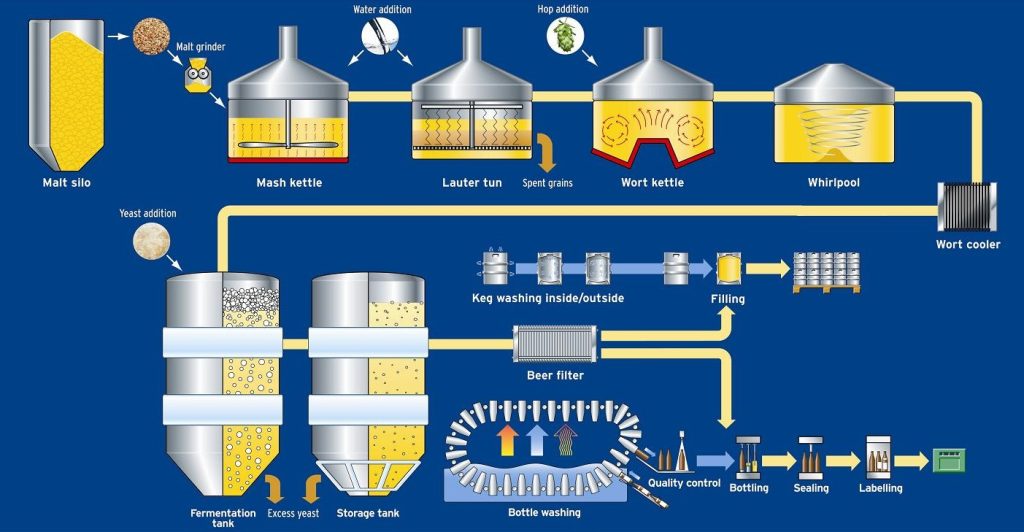
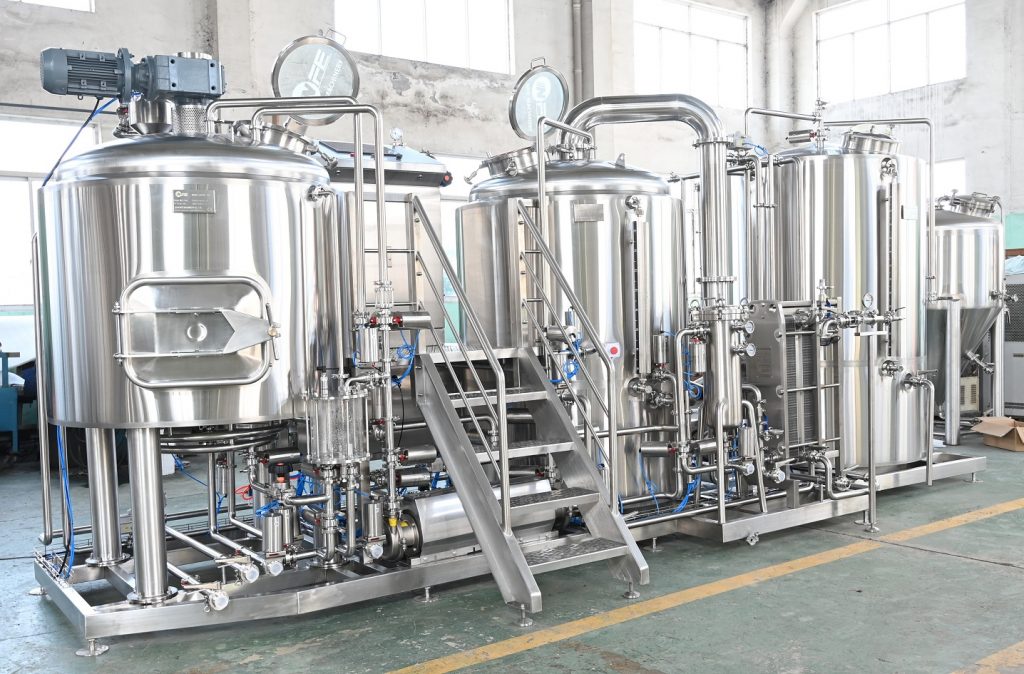
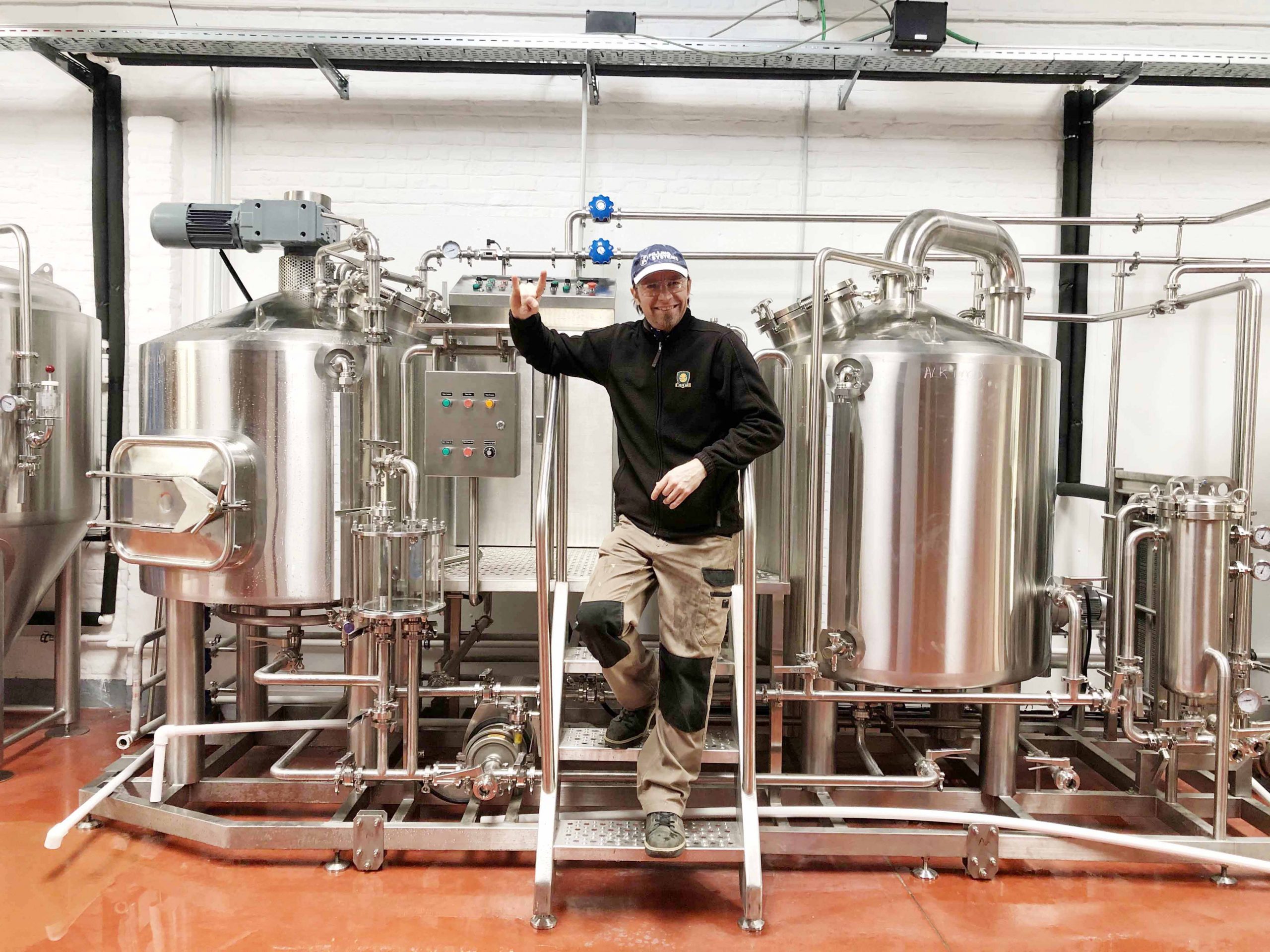
A commercial brewery is a carefully integrated system of specialized vessels, piping, controls, and support utilities. Each piece of equipment serves a distinct function within the brewing process, and all components must work together seamlessly to produce high-quality beer at scale.
Below is a summary of the core equipment found in a typical professional brewing system:
| Equipment Type | Description | Primary Function |
|---|---|---|
| Mash Tun | Insulated stainless steel vessel for steeping milled grains in hot water | Converts grain starches into fermentable sugars |
| Lauter Tun | Vessel with a false bottom and sparge arms for wort separation | Separates sweet wort from spent grain |
| Brew Kettle | Large kettle for boiling wort with hops and other ingredients | Sterilizes wort and extracts hop bitterness, flavor, and aroma |
| Whirlpool | Tank designed to create a vortex for solid separation | Removes trub and coagulated proteins after boiling |
| Fermenter | Temperature-controlled, insulated vessels for primary fermentation | Enables yeast to convert sugars into alcohol and CO₂ |
| Brite Tank | Pressurized vessel for conditioning, carbonating, and storing finished beer | Clarifies and carbonates beer before packaging |
| Piping & Valves | Food-grade stainless steel pipes, fittings, and pumps | Transfers liquids between vessels and process stages |
| Heat Exchanger | Plate-and-frame or tube-in-tube cooler for rapid wort chilling | Cools boiled wort to pitching temperature quickly |
| Control Panel | Centralized electrical control system for automated operation | Manages timings, temperatures, transfers, and alarms |
Depending on production goals, additional equipment may be required, including grain mills, yeast propagators, keg washers, bottle fillers, canning lines, labeling machines, and CIP systems.
2. Brewing Systems by Production Scale
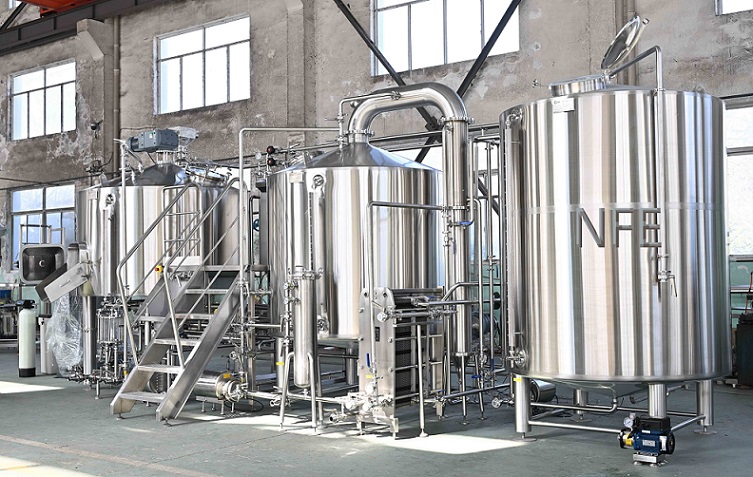
Commercial brewing equipment is available in a wide range of sizes and configurations to match different production volumes. The table below outlines the typical system sizes and their applications:
| System Type | Batch Capacity | Typical Applications |
|---|---|---|
| Nano Brewery | 1–3 BBL per batch | Brewpubs, tasting rooms, small taprooms, pilot systems |
| Microbrewery | 3–30 BBL per batch | Regional craft breweries, restaurant breweries |
| Regional Brewery | 30–600 BBL per batch | Expanding breweries, regional distribution |
| Large Brewery | 6000+ BBL per batch | Major craft breweries, national and international distribution |
Batch size, number of fermenters, and layout can be customized to align with production targets and growth projections. Nano systems allow brewpubs to brew small test batches on-site, while microbreweries can scale up by adding more fermenters as demand increases. Footprint, utility requirements, and capital costs rise significantly with larger systems.
3. Key Components of a Professional Brewing System
3.1 Mashing Equipment
Mash Tun
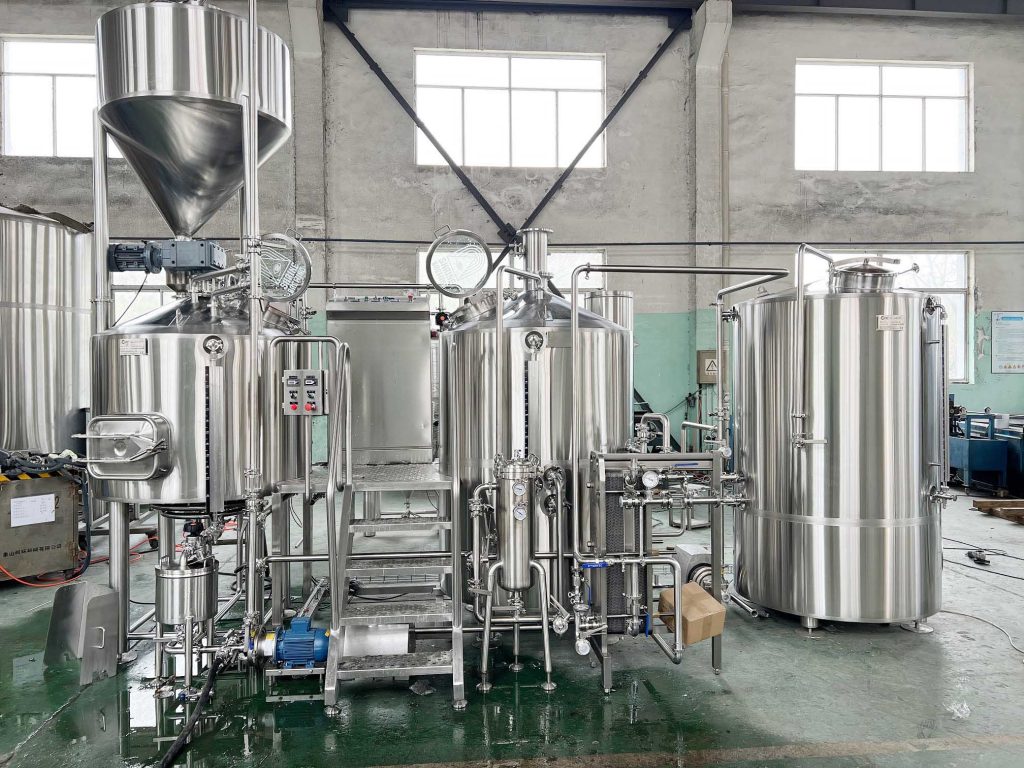
The mash tun is an insulated, temperature-controlled stainless steel vessel where milled grains are mixed with hot water to convert starches into fermentable sugars. Commercial mash tuns are available in single-infusion or stepped-temperature designs and are equipped with mixers and false bottoms.
-
Capacity: 10–600 hectoliters
-
Material: 304 or 316 stainless steel
-
Insulation: Foam or cladding for temperature retention
-
False Bottom: Perforated stainless steel sheet for wort collection
-
Mixer: Motorized rakes for consistent mash stirring
-
Heating: Direct steam injection or external heat exchanger
-
Controls: PID controllers for automated temperature regulation
Lauter Tun
The lauter tun separates sweet wort from spent grain using a false bottom and sparge arms for rinsing. It is sized to match the mash tun capacity and features a central wort collection outlet.
-
Filtration Media: Slotted or perforated bottom
-
Sparging System: Spray nozzles for hot water rinsing
-
Discharge: Automated spent grain removal
Grist Case / Malt Silo
Grist cases store milled grains before mashing. They include agitators and screw conveyors to ensure consistent feeding into the mash tun.
-
Capacity: 1–20 metric tons
-
Construction: Steel or stainless steel with dust-tight seals
-
Milling: Integrated roller or hammer mills
-
Conveying: Screw auger for controlled grist transfer
3.2 Wort Production Equipment
Brew Kettle
The brew kettle is where wort is boiled with hops and other ingredients to extract bitterness, flavor, and aroma while sterilizing the liquid. Commercial kettles are equipped with automated heating, boiling, and whirlpool controls.
-
Heating: Direct fire or steam-jacketed
-
Internal Calandria: Prevents scorching
-
Wort Aeration: For hot-side oxygenation
-
Automated Knockout: Smooth transfer to whirlpool or chiller
Whirlpool Vessel
The whirlpool removes hop debris, coagulated proteins, and trub after boiling. Tangential inlet creates a vortex that collects solids in the center for easy removal.
-
Trub Collection: Conical bottom for sediment removal
-
Wort Outlet: Side outlet for clarified wort transfer
3.3 Fermentation and Processing Equipment
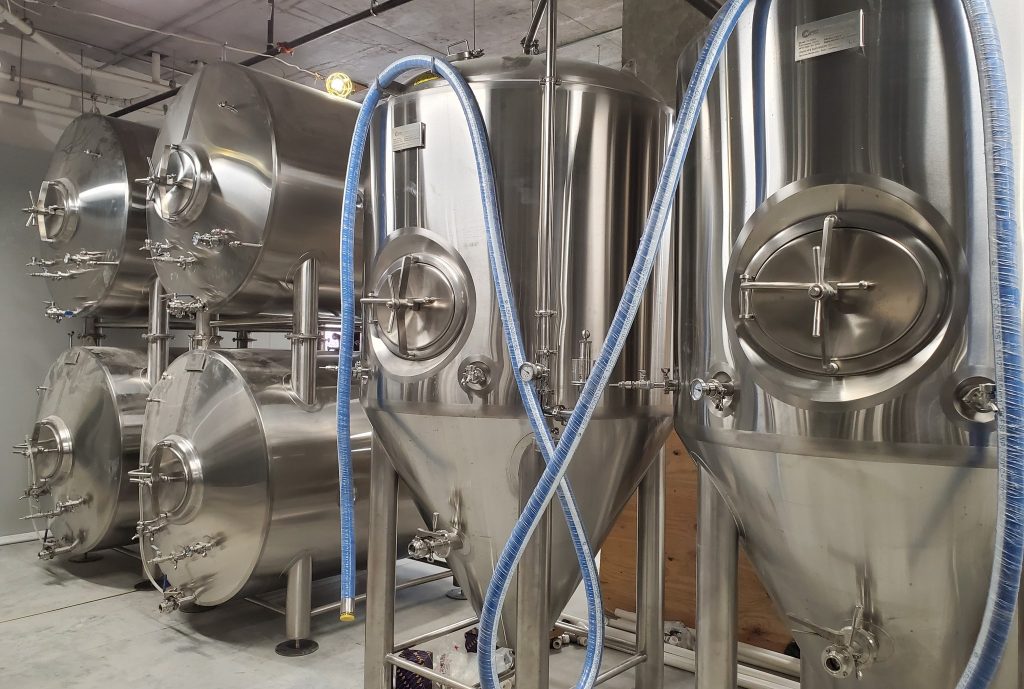
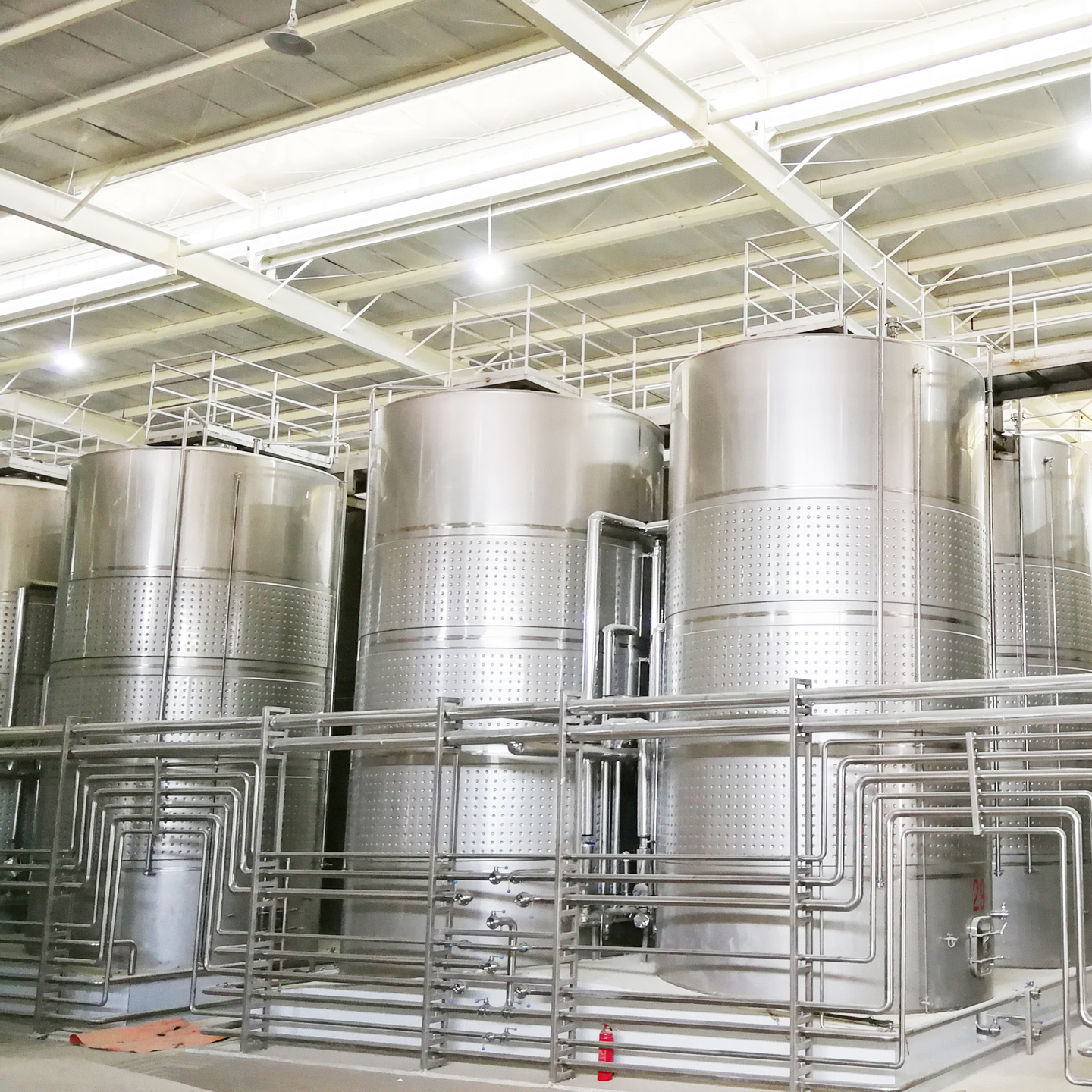
Fermentation Tanks (Uni-Tanks / CCTs)
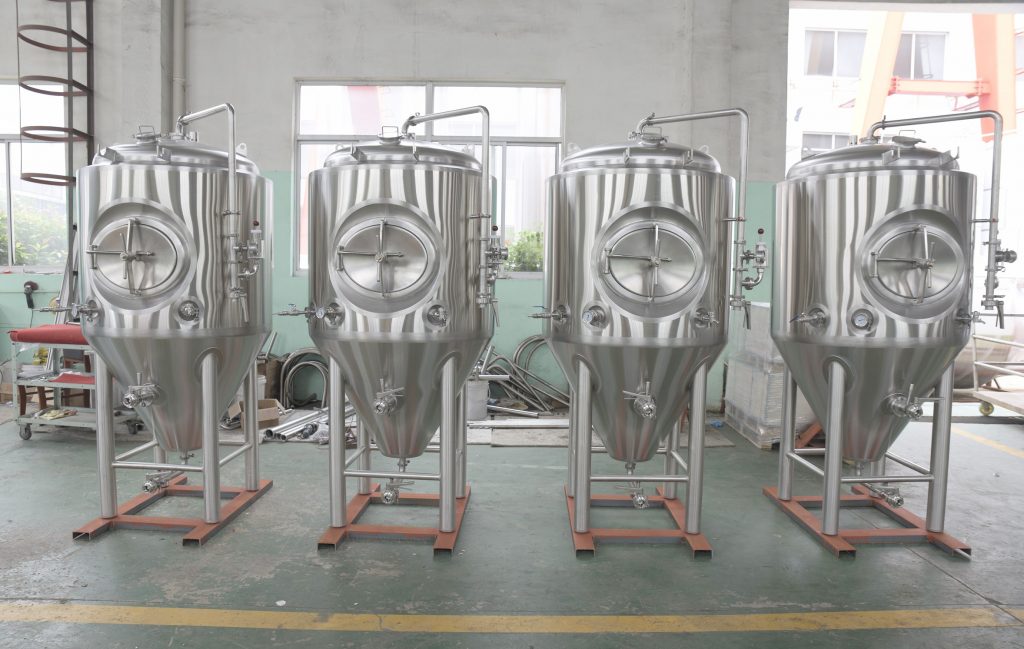
Insulated stainless steel fermenters allow controlled primary and secondary fermentation. They are equipped with cooling/heating jackets and CIP sprayballs.
-
Capacity: 10–600 hectoliters
-
Material: Sanitary-grade stainless steel
-
Temperature Control: Glycol cooling and electric heating
-
Pressure Rating: Supports closed transfers and carbonation
-
Yeast Management: Top-cropping or bottom-harvest configurations
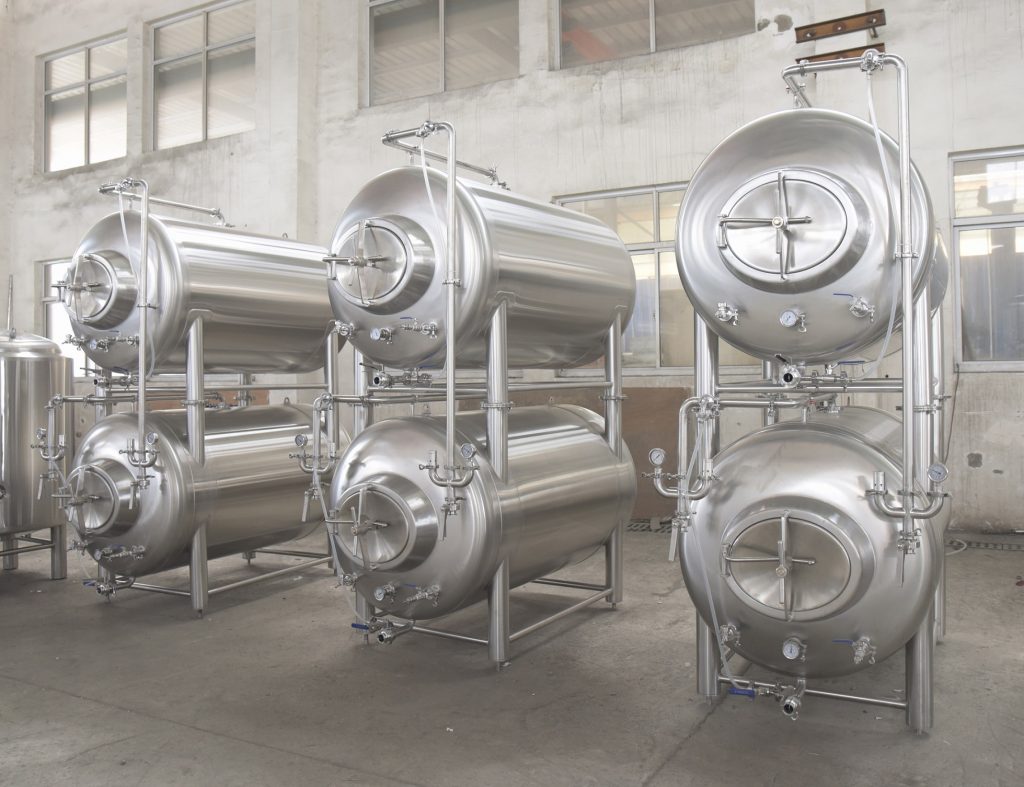
Brite Tanks
Bright beer tanks are used for conditioning, carbonating, and storing finished beer. They are highly polished and pressure-rated.
-
Finish: Mirror-polished (electropolished)
-
Carbonation: In-line or diffusion stone
-
Serving: Direct draw to taps or fillers
Heat Exchanger (Plate-and-Frame)
Used to rapidly cool boiled wort to yeast-pitching temperature using cold water or glycol.
-
Flow Configuration: Counterflow
-
Cooling Media: Chilled water or propylene glycol
-
Control: Modulating flow based on wort outlet temperature
Glycol Chiller
The glycol chiller provides chilled glycol to fermenters, brite tanks, and heat exchangers to maintain precise temperatures.
-
Media: Food-grade propylene glycol
-
Redundancy: Multiple circuits for reliability
-
Control: Thermostats and VFDs for setpoint maintenance
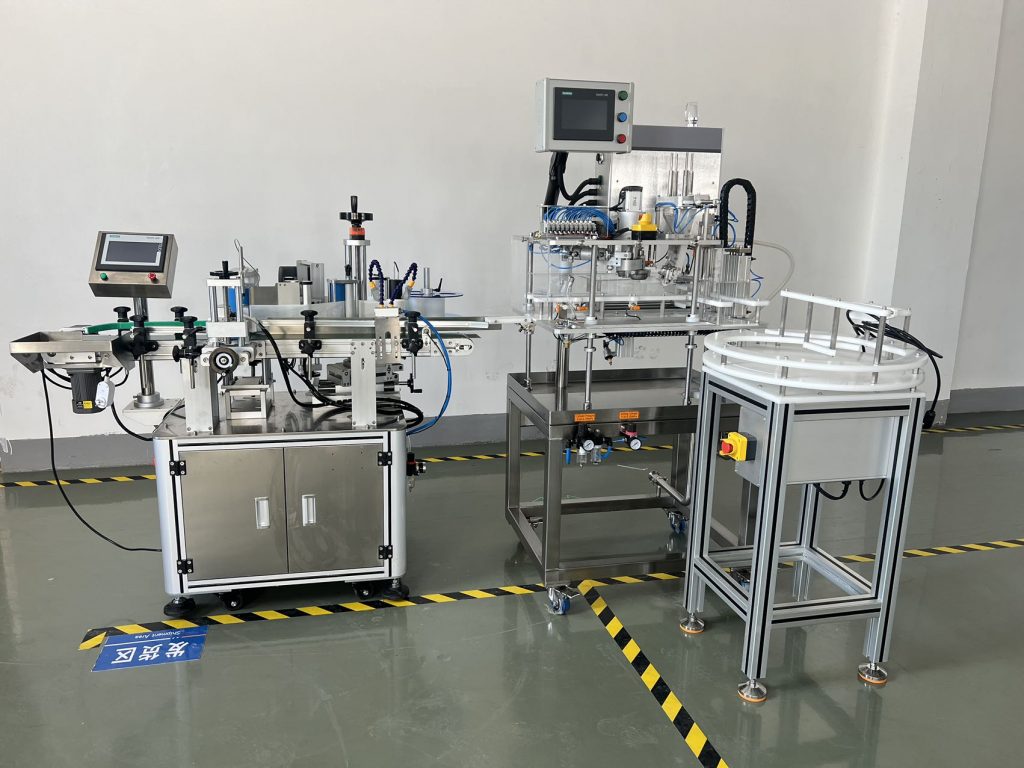
3.4 Packaging Equipment
Bottling Line
Automated bottling lines handle rinsing, filling, capping, labeling, and packaging.
-
Filler Type: Gravity or counterpressure
-
Capper: Spinning heads for crown or twist-off caps
-
Output: Up to 30,000 bottles/hour (varies by system)
Keg Washer and Filler
Integrated systems clean, sanitize, purge, fill, and seal kegs.
-
Cleaning Cycles: Caustic wash, rinse, sanitize
-
Filling: Counterpressure for foam-free fills
-
Output: Up to 300 kegs/hour
Canning Line
High-speed canning lines are designed for larger output volumes with full automation.
-
Filler: Volumetric or gravity
-
Seamer: Automated lid seaming
-
Pasteurizer: Tunnel pasteurization for stability

4. Equipment by Function
| Function | Primary Equipment |
|---|---|
| Milling | Roller mill, hammer mill, grist case |
| Mashing | Mash tun, infusion vessel |
| Lautering | Lauter tun, mash filter |
| Wort Boiling | Brew kettle, whirlpool |
| Cooling | Plate heat exchanger, glycol chiller |
| Fermentation | Uni-tank, CCT, open fermenter |
| Maturation | Brite tank, horizontal tank |
| Filtration | Plate-and-frame filter, centrifuge |
| Carbonation | Brite tank, carbonation stone |
| Packaging | Bottling line, canning line, keg washer |
| CIP | Sprayballs, CIP pumps, chemical tanks |
Additional systems—including grain handling, water treatment, steam generation, compressed air, and laboratory testing—are also essential for full-scale operations.
5. Design Considerations for Professional Brewing Equipment
Designing a brewhouse requires balancing multiple factors to achieve a safe, efficient, and scalable facility. Key considerations include:
-
Batch Size: Determines the size of the mash tun, kettle, and fermenters.
-
Production Volume: Current and projected output influence capacity and expansion planning.
-
Floor Space: Equipment footprint and layout must fit within available area.
-
Process Flow: Optimized layout reduces transfer distances and manual labor.
-
Utility Requirements: Electrical, plumbing, drainage, and ventilation needs must be met.
-
Equipment Heights: Gravity transfers can be utilized with proper elevation differences.
-
Automation Level: Manual, semi-automated, or fully automated systems affect labor and consistency.
-
Cleanability: CIP-compatible design is essential for sanitation.
-
Flexibility: Ability to handle different batch sizes and new products.
-
Upgradability: Modular systems allow future expansion with minimal disruption.
-
Budget: Capital investment must align with financial projections and growth plans.
6. Professional Brewing Equipment Pricing (Indicative Range)
Prices vary widely based on automation, capacity, materials, and supplier. Below are general estimates:
| Equipment | Estimated Price Range |
|---|---|
| 1–3 BBL direct-fire brew system | $25,000 – $60,000 |
| 7 BBL electric brew system | $60,000 – $200,000 |
| 15 BBL automated brewhouse | $100,000 – $350,000 |
| 30 BBL steam brew system | $200,000 – $600,000 |
| 60 BBL brewhouse and cellar | $30,000,000 – $2,000,000 |
| Fermenters (per barrel) | $2,000 – $8,000 |
| Brite tanks (per barrel) | $1,500 – $4,000 |
| Glycol chiller | $5,000 – $50,000 |
| Grain handling system | $6,000 – $50,000 |
| Keg washer/filler | $7,000 – $100,000 |
| Bottling line | $50,000 – $1,000,000 |
| Canning line | $50,000 – $1,000,000 |
Accurate quotes should be obtained from equipment suppliers during the planning phase, including installation and site work costs.
7. How to Choose a Professional Brewing Equipment Supplier
Selecting the right equipment supplier is a critical decision. Consider the following criteria:
-
Review past brewery projects similar to your desired scale
-
Assess expertise with your preferred beer styles and processes
-
Evaluate quality of materials, workmanship, and components
-
Understand lead times and delivery schedules
-
Confirm installation, training, and after-sales service capabilities
-
Check references and customer feedback
-
Ensure availability of spare parts and technical documentation
-
Compare pricing and warranty terms
-
Verify compliance with relevant standards (CE, ASME, UL, OSHA)
-
Evaluate automation capabilities and ease of use
-
Look for remote telemetry and troubleshooting support
-
Seek long-term partnerships beyond the initial purchase
8. Installation and Operation Best Practices
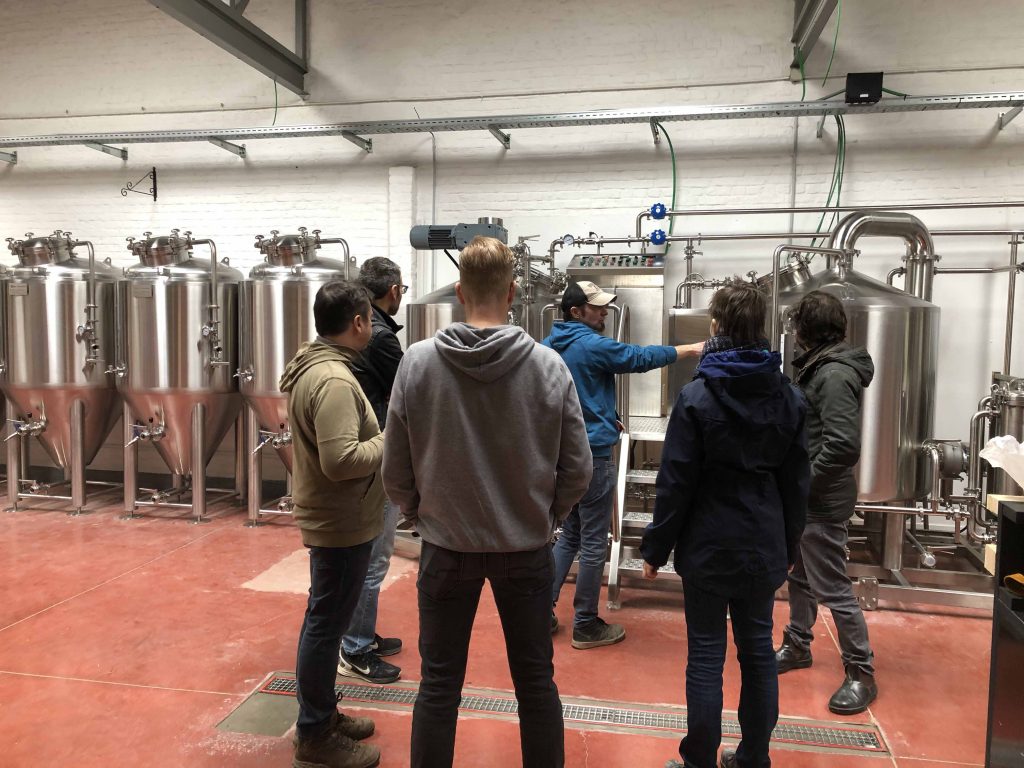
Installation
-
Follow manufacturer rigging and installation instructions
-
Use experienced contractors for plumbing, electrical, and HVAC work
-
Inspect for shipping damage and test components before startup
-
Verify utility connections meet equipment specifications
-
Perform calibration and water trials before first brew
-
Check welds and joints for leaks after pressurization
-
Review control programming and sensor calibration with technicians
Operation
-
Follow standard operating procedures and recipes
-
Monitor temperatures, flows, and pressures at regular intervals
-
Take samples to verify mash conversion, gravity, and pH
-
Track fermentation progress with gravity and temperature logging
-
Inspect gaskets, fittings, and valves regularly
-
Follow cleaning and sanitation protocols
-
Document deviations and corrective actions
Maintenance
-
Establish routine inspection and preventive maintenance schedules
-
Lubricate pumps, motors, bearings, and moving parts
-
Monitor for unusual vibration, noise, or leaks
-
Replace worn or damaged components promptly
-
Descale heat exchangers and steam equipment periodically
-
Regenerate filters and ion exchange beds as needed
-
Maintain an inventory of critical spare parts
9. Key Takeaways and Recommendations
-
Select equipment that matches your production scale, growth plan, and budget
-
Design an efficient brewhouse layout with process flow in mind
-
Choose high-quality stainless steel equipment with sanitary standards
-
Automate where possible to reduce labor and improve consistency
-
Partner with experienced suppliers and contractors
-
Plan for adequate utility capacity and site infrastructure
-
Develop SOPs and train staff thoroughly
-
Monitor and log key process parameters
-
Perform preventive maintenance to maximize equipment lifespan
10. Frequently Asked Questions
What is the typical cost of a 7 BBL microbrewery system?
A complete 7 BBL system typically ranges from $100,000 to $300,000, including brewhouse, fermenters, brite tanks, and chilling systems.
How do I size my mash tun for a 5 BBL brewhouse?
The mash tun should be approximately 130% of the batch size to allow sufficient room for stirring and sparging. A 7 BBL mash tun is recommended for a 5 BBL system.
Should I choose stainless steel or copper kettles?
Stainless steel is the industry standard due to its corrosion resistance, sanitary properties, and low maintenance. Copper requires special liners and higher upkeep.
How many fermenters do I need?
As a guideline, plan for 3–4 times the number of fermenters as brewhouse batch sizes. For a 10 BBL brewhouse, roughly 30–40 BBL of fermentation capacity is recommended.
What power is required for a 7 BBL electric brewery?
Estimate 25–35 kW for pumps, heaters, chillers, and controls. Consult an electrical contractor for proper panel and wiring sizing.
Should I automate my brewery?
It depends on budget, labor, and production goals. Automation reduces labor and improves consistency, while manual systems offer lower upfront costs and hands-on control.
What spare parts should I keep on hand?
Gaskets, seals, fittings, hose clamps, pump seals, thermowells, heating elements, and common electrical components.
How often should brewing vessels be serviced?
With proper maintenance, vessels can last 10–20 years before major repairs. Preventive maintenance is key to maximizing lifespan.
This guide provides a foundational understanding of beer brewing equipment. As a professional brewing equipment manufacturer, NFE offers customized solutions and competitive quotations tailored to your specific production needs—from system design to installation support, ensuring your brewery is built for success.


 Message