

 HOME
 PRODUCT

Tubular UHT Pasteurizer
Our tubular UHT (Ultra-High Temperature) pasteurizer is designed for the continuous, instantaneous sterilization of a wide range of liquid and semi-liquid food products, including milk, fruit juice, ice cream mix, tomato paste, beer, and egg products. The tubular heat exchanger design allows reliable processing of products containing pulp, fibers, or higher viscosity, which are difficult to handle in conventional plate-type systems.
Compared with plate heat exchangers, the tubular structure is better able to handle materials containing fibers, fruit pulp particles, or a certain viscosity, is less prone to clogging, and is relatively easy to clean.
It is commonly used for continuous sterilization of fluid foods such as milk, fruit juice, tea beverages, beer, egg products, ice cream mixes, and tomato paste.

 Contact

 E-mail
Advantages
|
 |
Main Functions and Roles of Tubular UHTST Pasteurizer
The core function of a tubular UHT flash pasteurizer is to heat liquid materials to a relatively high temperature in a short time and hold them for a few seconds to kill harmful microorganisms and enzymes, while preserving the flavor and nutrition of the product as much as possible, and then rapidly cool it down.
1. Instant High-Temperature Sterilization
The material is rapidly heated to the sterilization temperature (e.g., about 90°C–95°C for juice, possibly higher for milk) through a tubular heat exchanger and held for only a few seconds to a minute. This “flash” method can effectively destroy microorganisms while causing less quality damage than prolonged heating.
2. Preserving Flavor and Nutrition
Because the heating time is extremely short, the loss of product color, aroma, and heat-sensitive nutrients (such as vitamins) is relatively small. For heat-sensitive products like juice and milk, this is a key reason for choosing the flash pasteurization process.
3. Enzyme Inactivation and Product Stabilization
High-temperature short-time processing can inactivate enzymes that cause product spoilage or browning, extending the shelf life and stability of the product.
4. Rapid Cooling
After sterilization, the material immediately enters the cooling section and is rapidly cooled through heat exchange with a cold medium (e.g., milk can be cooled to below 65°C or lower), avoiding excessive heating that produces a “cooked” taste and preparing it for subsequent filling or storage.
5. Suitable for Products Containing Particles or High Viscosity (Advantage of Tubular Design)
Compared with plate heat exchangers, the tubular structure is better able to handle materials containing fibers, fruit pulp particles, or a certain viscosity, is less prone to clogging, and is relatively easy to clean.
Parameter
 |
 |
Equipment Features:
-
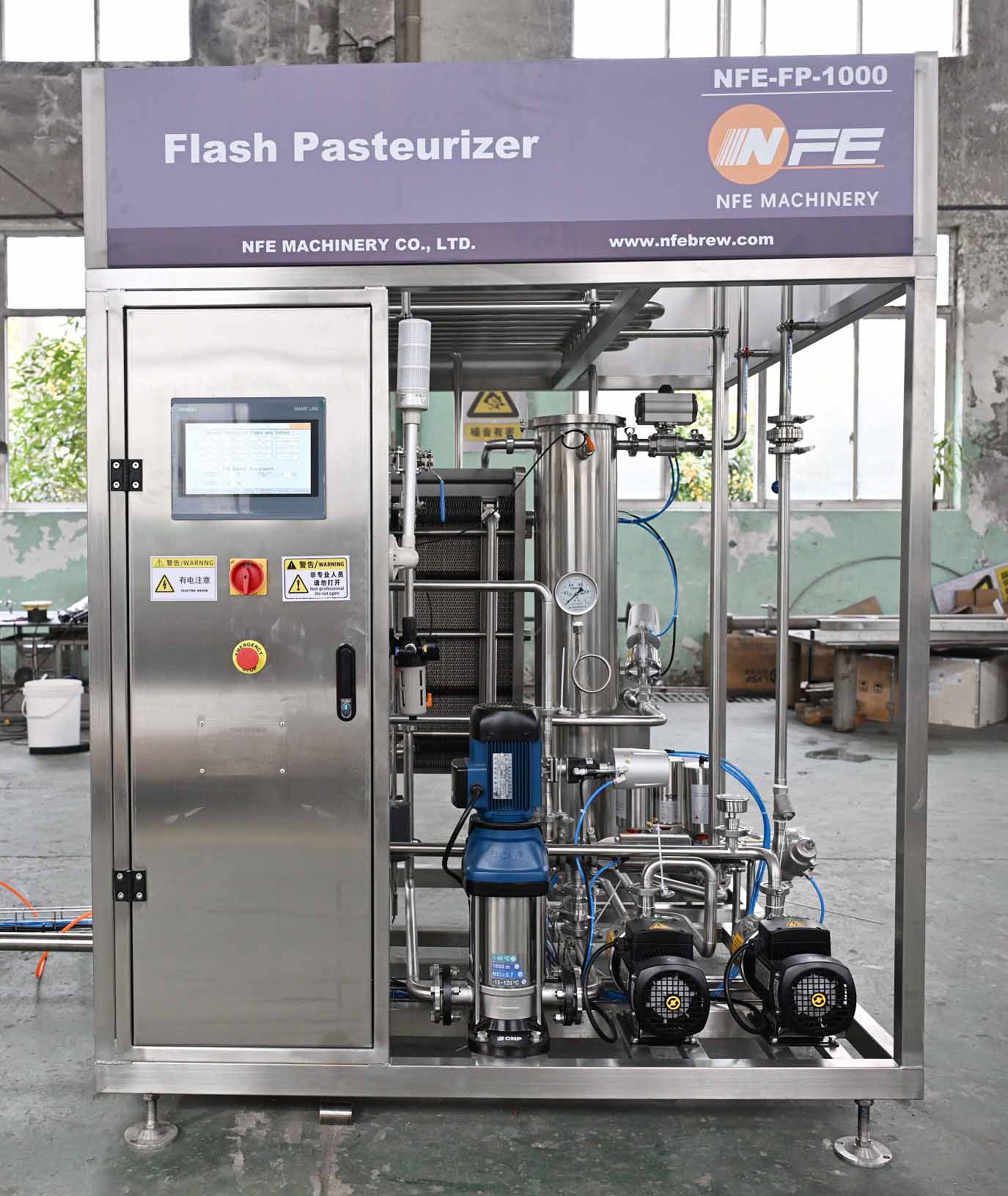
Spirax Sarco Steam Control System – Ensures precise and stable temperature control with an accuracy of ±0.5°C, guaranteeing consistent sterilization performance and product safety.
-
Automatic Reflux on Temperature Deviation – If the sterilization temperature falls below the set point, the system automatically redirects the product back for re-processing, preventing any under-sterilized product from proceeding downstream.
-
Closed Material Tank with Splash-Free CIP – The closed-loop tank design enables effective Cleaning-In-Place (CIP) without splashing, improving hygiene, operator safety, and cleaning efficiency.
-
Brazed Heat Exchanger for Hot Water – Provides high heat transfer efficiency, rapid temperature response, and reduced energy consumption, contributing to overall operational cost savings.
-
Tubular Heat Exchange Structure – Handles particulate-containing and viscous products with minimal risk of clogging, and is easy to clean and maintain.
-
Continuous Processing – Supports stable, uninterrupted production with minimal product loss and consistent quality.


 Message