

 HOME
HOME PRODUCT
Olive Oil Tank
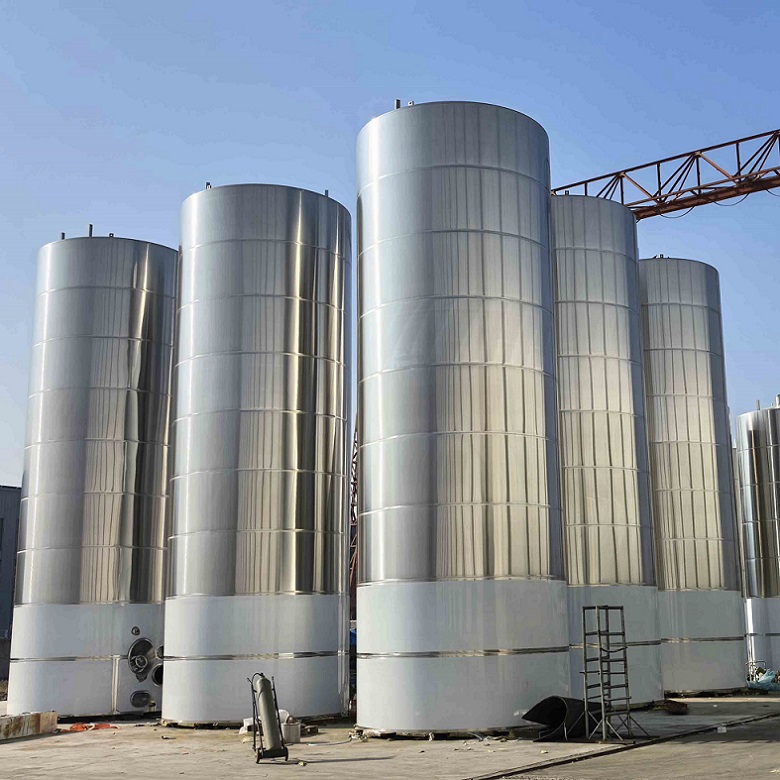
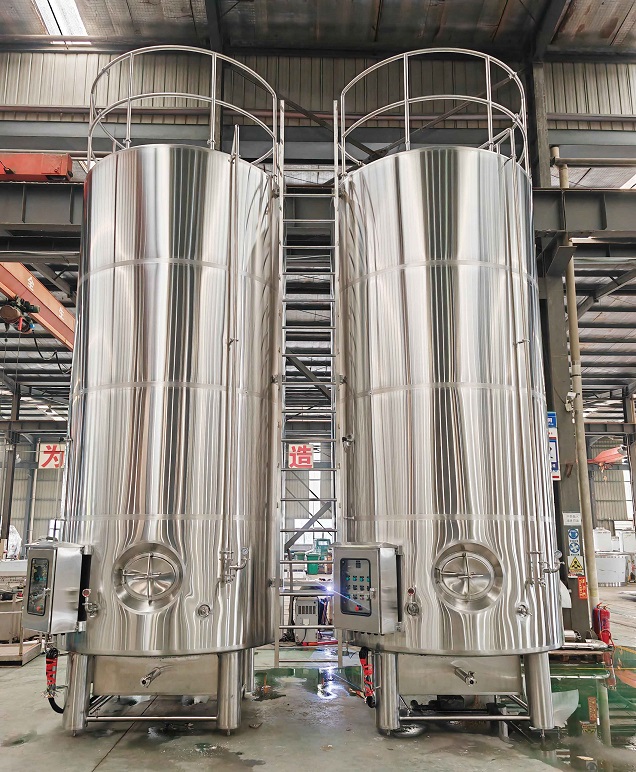
An olive oil storage tank is a specialized industrial container designed for the safe, hygienic, and long-term storage of extra virgin olive oil and other high-quality edible oils. Unlike tanks for many other liquids, the design of an olive oil storage tank is driven by one single overarching principle: preservation. Olive oil is highly sensitive to oxygen, light, heat, moisture, and impurities, all of which can accelerate oxidation and lead to rancidity, off-flavors, and loss of nutritional value. Therefore, the tank's entire engineering philosophy is centered on creating a controlled, inert environment that protects the oil's natural quality from the moment of extraction to bottling.

 Contact
 E-mail
Advantages

Materials and Workmanship
The selection of materials for olive oil storage tanks is critical. The material must be entirely non-reactive with the oil and must not introduce any off-flavors.
-
Core Material: The main body is typically constructed from AISI 304 food-grade stainless steel. Stainless steel is an ideal storage material because it is odorless, tasteless, and impermeable to light and moisture. In environments with higher corrosivity, the material can be upgraded to the more advanced AISI 316L stainless steel.
-
Surface Finishing: To ensure hygiene and ease of cleaning, the interior walls of the tank are usually finished with a high-precision BA (Bright Annealed) mirror polish. This smooth surface prevents oil residue from adhering and inhibits bacterial growth. The exterior walls, on the other hand, can be finished in various decorative styles as required, including mirror-polished, matte, or marble-patterned finishes.

Core Design – The Key to “Preservation”
The design of olive oil storage tanks reflects an uncompromising pursuit of “preservation” at every turn. The core functional features are as follows:
-
Oxygen Exclusion (The Most Critical Function): This is the key to preventing oxidative rancidity in olive oil. Modern tanks are commonly equipped with an inert gas interface, which allows nitrogen to be injected into the tank to displace the air in the headspace, forming a protective blanket.
-
Technical Principle: Research has confirmed that by precisely controlling the nitrogen injection, the oxygen concentration in the headspace can be stabilized at an extremely low level of 0.7% to 0.9% . This effectively inhibits oxidation reactions and maintains key chemical indicators of olive oil—such as acidity level, total phenolic content, and peroxide value—within the premium quality range.
-
Industry Practice: Large-scale producers often equip their tanks with a complete nitrogen inerting system to prevent the oil from coming into contact with oxygen throughout the entire storage and transfer process.
-
-
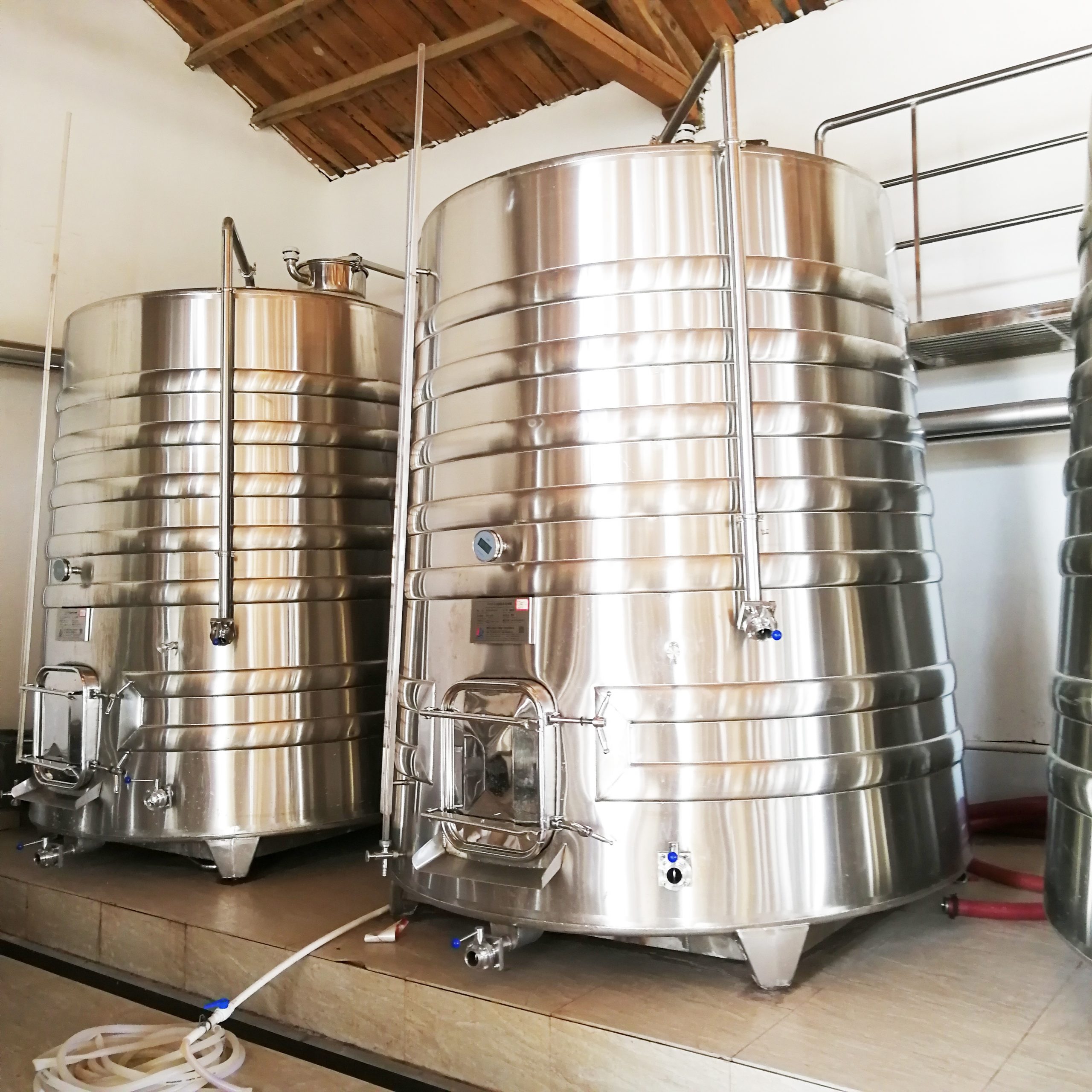
Cone-Shaped Bottom and Sediment Management: During static storage, impurities such as fruit pulp and moisture will naturally settle to the bottom. The tank’s cone-shaped bottom (with common apex angles of 30°, 45°, or 60° ) allows these impurities to gather smoothly and be easily drained through the bottom valve without disturbing the clear oil above.
-
Sealing and Light Protection: The tank is designed with complete sealing to prevent outside air and moisture from entering. The stainless steel material is inherently opaque, effectively preventing quality deterioration caused by light exposure. Some designs also employ brown-tinted glass linings or semi-underground storage to further enhance light protection and temperature stability.
Parameter
Capacity and Customization
Olive oil storage tanks are available in a wide range of sizes to suit operations of all scales:
| Application Scale | Typical Capacity Range |
|---|---|
| Small boutique mills / farms | 500 – 5,000 liters |
| Medium commercial producers | 5,000 – 50,000 liters |
| Large industrial facilities | 50,000 liters to several hundred tons (with custom dimensions) |

 Message